


Ritual brands are exploding because they are selling what has become the scarcest resource of the moment: a nervous system that can regulate itself.
Ten years ago, a pill box was a trending Amazon product — proof that a younger generation was getting serious about supplements. Today it’s a best-selling, TikTok viral, $430 art piece for the home, sold and contextualized beautifully by LES Collection, whose founder Lauren Sands is fully committed to art-forward, intentional living.
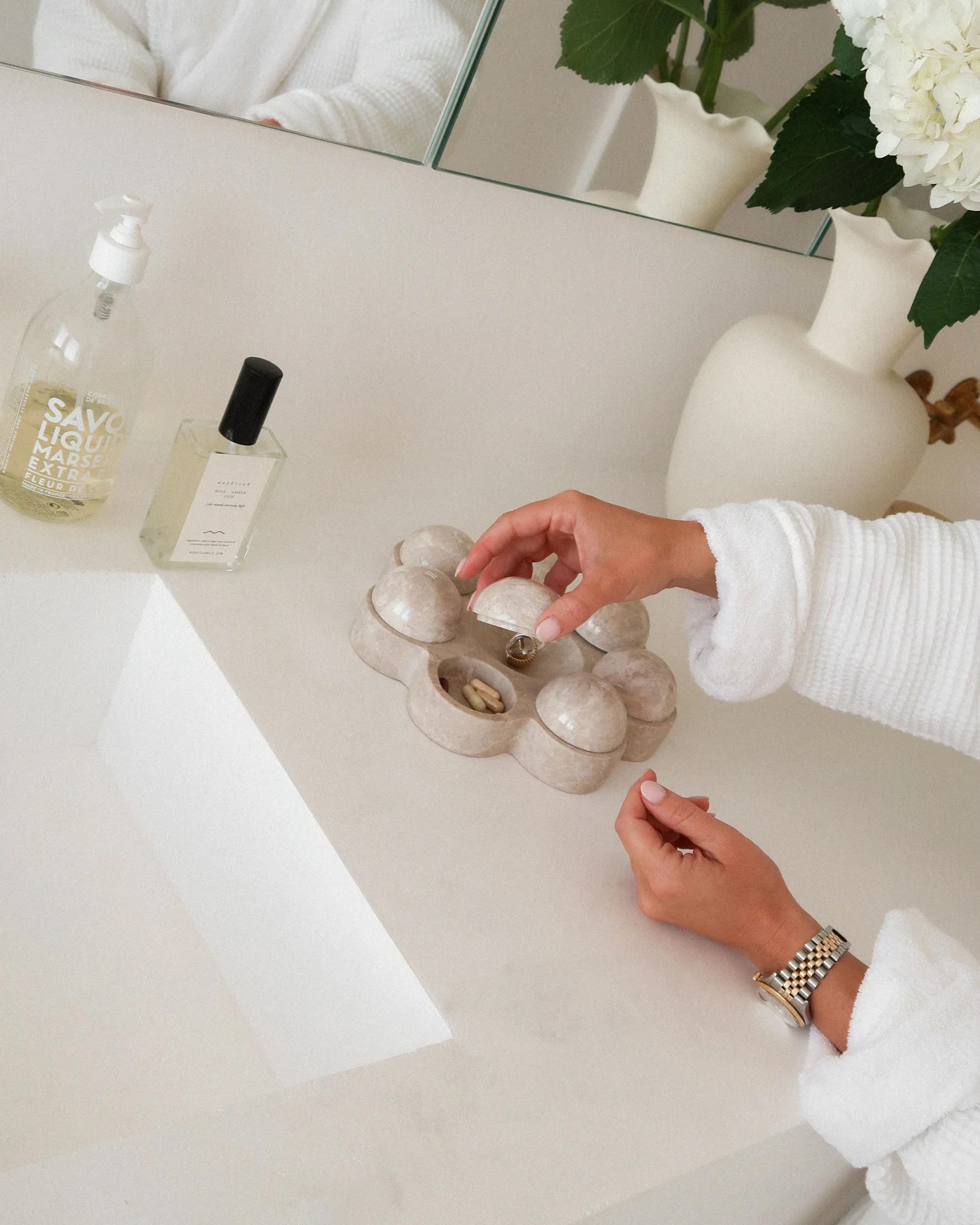
LES Collection x Anastasio Home Pill Box
Photography by LES Collection
In the last five years, the art of a ritual has slowly become a nicely-funded aesthetic category in consumer goods too — Crown Affair, Flamingo Estate, Ghia, Aesop, Vyrao, Maude. Having spent this time developing supporting characters for said rituals — trays, vessels, boxes galore via my brand Anastasio Home — I can tell you in great detail why a thick marble bowl is grounding and why the sight of stacked Tupperware sets my adrenals aflame.
The dominant read on ritual brands is that they surfaced because people wanted to slow down. Pandemic, burnout, digital overwhelm — a break was needed, and candles and matcha and skincare and hair care became the break. That read is true, but shallow. Slowness has been sold continuously to American consumers since the 1970s. What is new is what slowness now requires.
The scarce resource today is a body that can settle itself down.
Work-from-home dissolved the edges between labor and life. The phone fragmented attention into six-second pieces. The group chat moved touch-bases into every waking hour. Somewhere in there, the things that used to regulate us — like the walk to the train, subway rides with no service, the evening that was quiet because it could not be otherwise — disappeared. An entire generation of nervous systems woke up one morning with no external scaffolding for state change, and they have been improvising ever since.
Simply put, ritual brands sell a surface. A physical footprint where a state change becomes not only possible, but justified.
The matcha routine is a fifteen-minute nervous system transition between waking up and logging on to work. The hair mask is a fifteen-minute transition between finally getting your kids to bed and launching into your cozy, evening scroll. What people are buying are cues, and perhaps permission. Physical, visible, domestic prompts that guide a depleted nervous system to the next state of being. This amounts to behavior design. The object becomes a crutch — or a much-appreciated aid — for a body that struggles to regulate itself from the inside.
I am saying this from inside the industry. When a hand-carved stone teacup weighing nearly a pound lands on a nightstand, the nervous system of the person who bought it does a specific thing. It transitions for turn-down. The object is doing the committal work before the tea is even poured. This is a visceral response is the combination of the object’s weight, density, intentional design, and luxurious surface. *Tutto a posto*, my mother would say. Everything is in place, I can feel it, I can let go, finally. We, geriatric millennials especially, cannot get enough of this feeling.
I did not arrive at this thesis through research. I arrived at it through five years of watching my own nervous system collapse under the weight of building a company while raising small children in a culture that has yet to place nervous system health on the same axis as mental health, physical health, sexual health, etc.
When I say the body is not fooled, I mean my body stopped being fooled. When I say we are buying cues because we cannot regulate from the inside, I mean I have not regulated from the inside in years and I rely on a few smartly placed vignettes in my home to stay on course. I am not claiming the stone tray or bowl is the solution. But I know the difference between a day that has no visible anchors in it and a day that has even one.
For the first time, consumers are not selecting home products only by how they photograph. They are selecting by how they make the nervous system feel in space and time.
The category is already assembling itself in adjacent corners of the market. Weighted blankets. Vagal nerve stimulators like Sensate and Apollo Neuro. The Moonbird breathing device. Acupressure mats. Fidget objects and coloring books for adults. Every one of these is selling the same underlying product: a nervous system that can settle itself down. These devices act directly on the body. Home objects do something adjacent — they build the visible scaffolding, the altars around which regulation is invited to happen.
Since the 2010s, wellness centered broadly on mental and physical health. For the late 2020s, wellness is becoming somatic.
In total service to the nervous system. And in some cases, spiritual-adjacent (different essay altogether!).
I posit that the first market for somatic goods will be formed by the ever-searching, geriatric millennial women flirting with perimenopause. We are somatically deprived, overstimulated, underslept, open to suggestion, and digitally articulate. We will generate the memes that become the language for the campaigns. Our complaints will design the products that go to market. Our dollars will build the category. In some ways, we already have. Alice, I’m looking at you.
We will be the first demographic to validate this market. We will not be the last. Not at the pace that technology is shaping us. So it’s a matter of time because wellness is already toeing the lines between addressing, measuring, analyzing, and regulating the nervous system, and the formula is still unclear. What can’t be measured, can’t be managed. What can’t be managed, can’t be solved. What can’t be solved, can’t be sold.
What looks like a new industry is the monetization of an old discipline.
It is the intuitive composition of daily life into a sequence of surfaces, vignettes, and small choices that make a household, a mind, and a body run without friction. The tray by the door that catches keys and the exhale of the day. Supplements out in a vessel you love to return to each morning. The coat hook by the door making your life smoother every day. This is the oldest form of systems design, and it has been underestimated for centuries as mere domesticity or *making a home*. Today, in my opinion, its use case has catapulted squarely into somatic regulation.
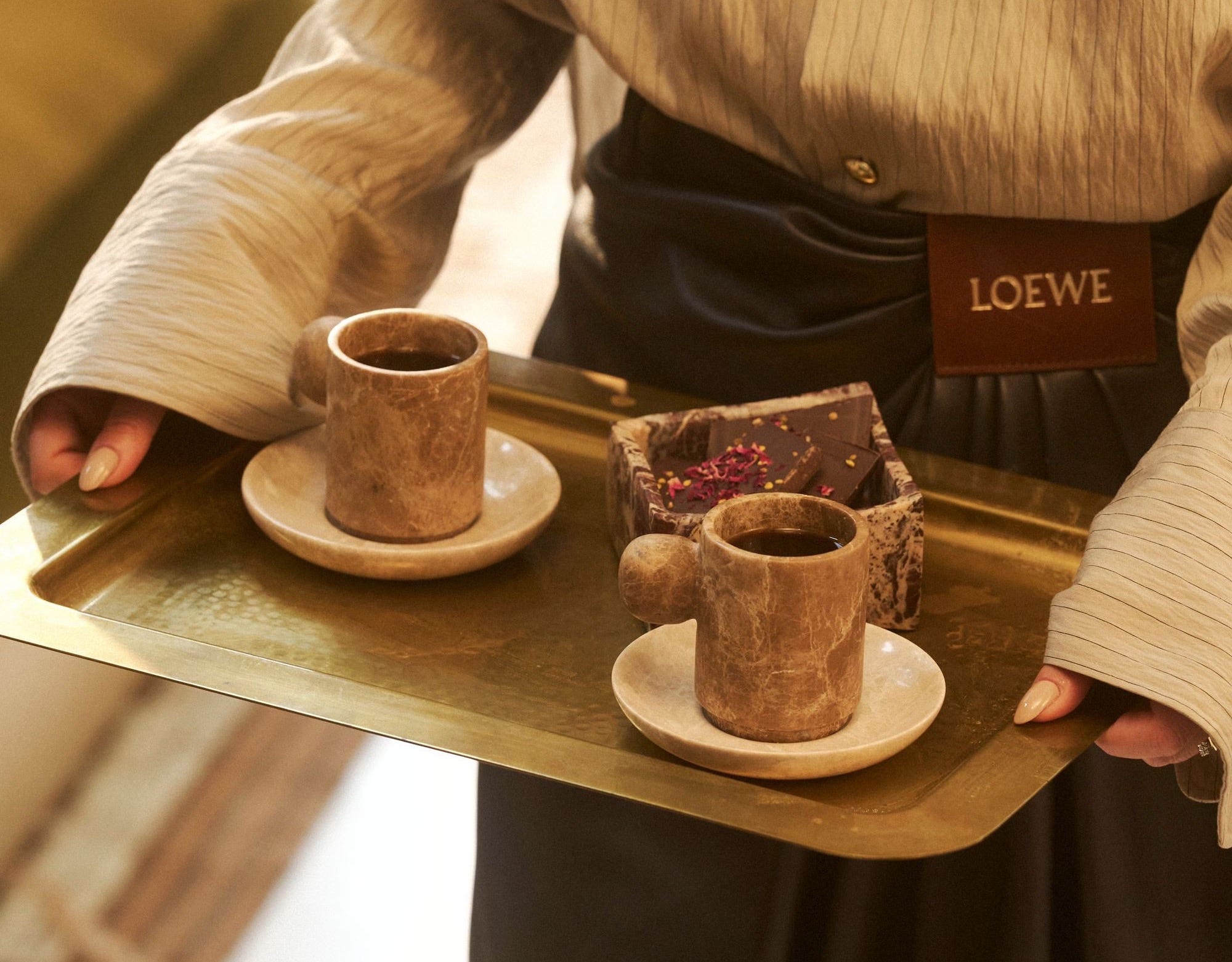
When we designed a coffee ritual set with Tania Sarin, I saw this principle at work in her beautiful home, also adored by the internet. It’s not just the interior design and styling. It is the evidence of Tania’s disciplined eye — uncluttered, directional, committed, and structured for intimate hosting.
Hosting, and more specifically coffee service, in her world, are reason for intimacy. Which, in 2026, is more likely to occur when compelling objects or products are introduced. The communal activity our grandmothers did without comment is something we now architect from a place of beauty and visceral joy, using accessories we return to because they make us feel a way.
For many of us, surfaces are externalized cognition.
Out of sight means out of mind, fully and without exception. A book on a shelf does not exist. A vitamin in a drawer does not exist. A ritual that cannot be seen will not be practiced. As a young family, my own home is structured more than it is styled (those styling days are on pause). Every surface prompts the next task for a smooth morning, bedtime, and bath time. The various unlit candles sing my name when I have the house to myself long enough to set them alight. An empty bowl on the table reminds me we need more fiber in the house, stat. A tray on my nightstand is my contract with the next morning.
A lot of people buying ritual brands right now — stated neurodivergent or not — are using objects to do what their attention will not. We are running on fragmented focus and outsourced cognition. Our surfaces are doing the remembering for us. This is not a moral failure. It is a material condition of our times.
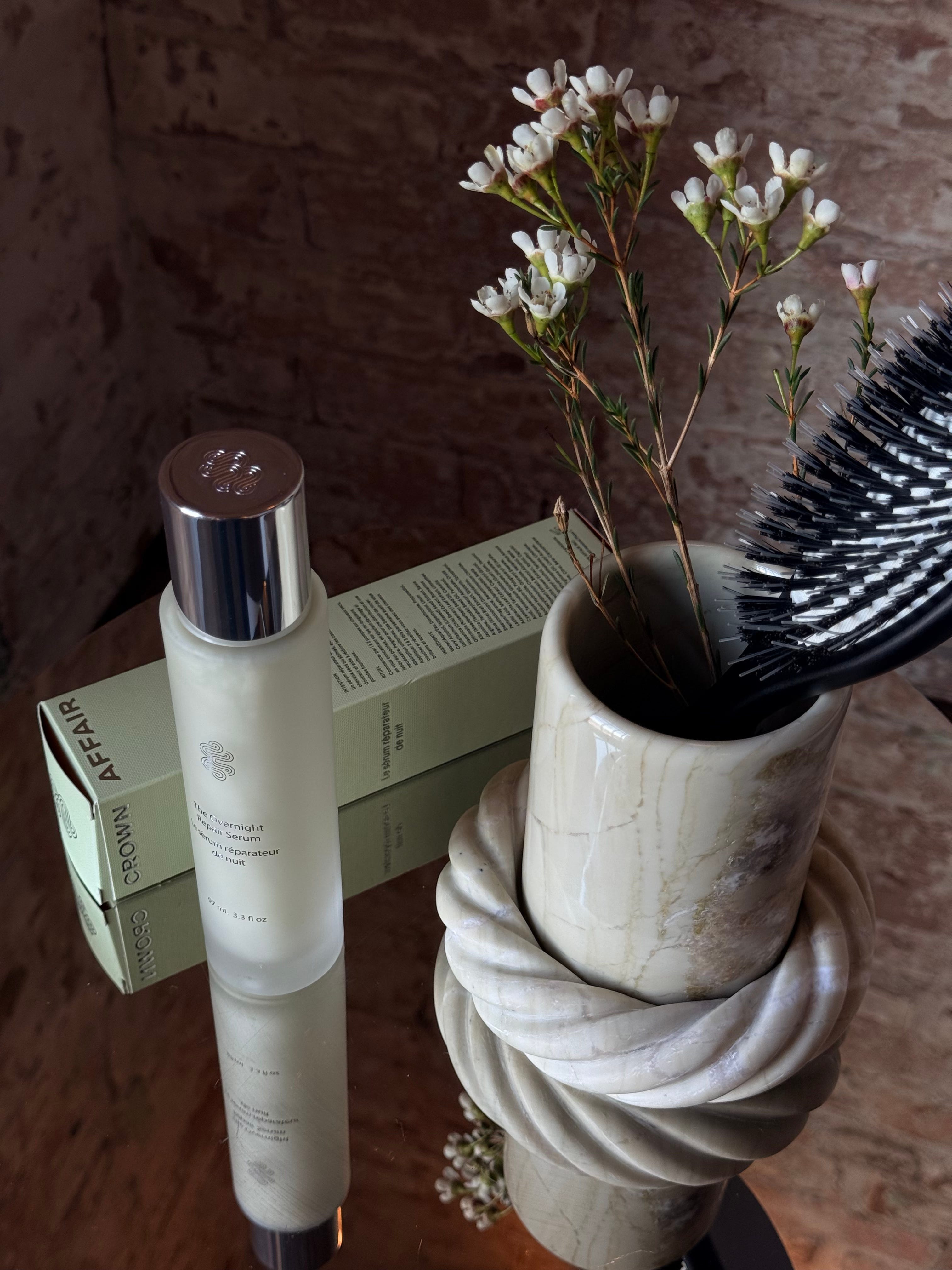
This past January, we designed a hand-carved stone cup and saucer for Crown Affair’s ritual overnight serum launch. Thick, satin-polished, muted in tone, heavy enough to slow the hand that held it. Each piece took long hours of hand labor at our atelier in Rajasthan — a lot of hands, real hours, real human skill embedded in the object. The set sold out across Crown Affair and Goop in record time despite premium pricing. What buyers felt when the object arrived was density. The particular weight of a thing made slowly, by a human hand, and challenging to find on the market, perhaps for its perceived frivolousness. Crown Affair has coined the ritual positioning more successfully than any brand in the last five years because they have never once confused the mood for the mechanism. Dianna Cohen understands — at the level of muscle memory — that the job of a ritual object is to do something to the body and the mind, not only to look like something on a shelf.
The next decade of home design will sell premium behavior outcomes, not just taste.
For the last decade, the industry sold palettes, silhouettes, and moods. The next decade will sell what those palettes and silhouettes are actually doing to the people who live with them. Every object in a well-composed home is an invitation to act a certain way. A tray is an altar to the skincare routine. A shelf of books entices you to seek knowledge. The vessel on the counter is the reason the ritual, or nourishing habit, happens. Nourishing habits are paramount to system regulation, therefore the objects that keep returning to them are too.
Hospitality brands have been engineering this at property scale for a century. Auberge, Aman, Four Seasons, Rosewood — all of them have long understood that a guest’s nervous system is the actual guest. The home category is now catching up, at object scale, to what hospitality has always known.
Ritual brands exploded because they packaged this framing before the rest of their industry had a name for it. What most may not register yet is that this is not a single category among many. This is the underlying logic of how people want (desperately need) to feel inside their homes. The brands that win the next ten years will be the ones whose objects do the fastest, most honest, most legible work on a human nervous system. Beauty alone will not be the selector. The body will.
Call it somatic design. A consumer, a category, and an era. The people who understand this now will build the homes, furniture lines, and lifestyle systems of the next decade.
I am in this industry because I believe in what a well-made, beautiful product can do for a body and mind that is overwhelmed by its daily obligations. If that sounds overly sentimental for an inanimate object, I can live with that. The ritual economy is not an aesthetic trend. It is a generation of people — most of them women, most of them tired, most of them trying to build a life that feels stable — reaching for tools and reasons that beg them to settle the flock
down.